Challenge: Delivering a Geotechnical Framework for a Remote Island Construction Project
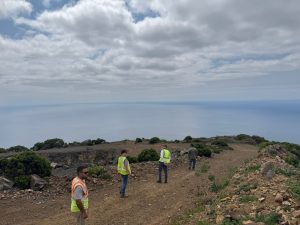
GeoEnviro Solutions Ltd (GES) provided ground investigation support and worked in collaboration with engineering teams on St Helena to develop a geotechnical framework and earthworks specification for upcoming infrastructure projects, including the planned new correctional facility.
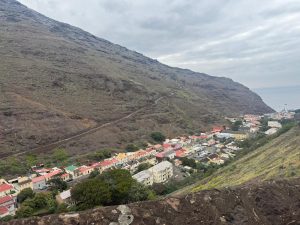
St Helena’s remote location in the South Atlantic Ocean—over 1,200 miles from the nearest mainland—presents inherent challenges for construction planning, particularly regarding material reuse, site investigation methodology and logistics. The objective of this assignment was to provide practical, data-led geotechnical guidance that complemented local expertise and respected existing working practices.
Travel to the island highlighted the complexities of working in remote environments. Rob Lewis, GES’s Managing Director, travelled via Johannesburg, with weather-related delays before securing a safe transit window. The journey involved crossing the African continent, refuelling in Namibia and then flying across the Atlantic to reach one of the most remote inhabited islands.
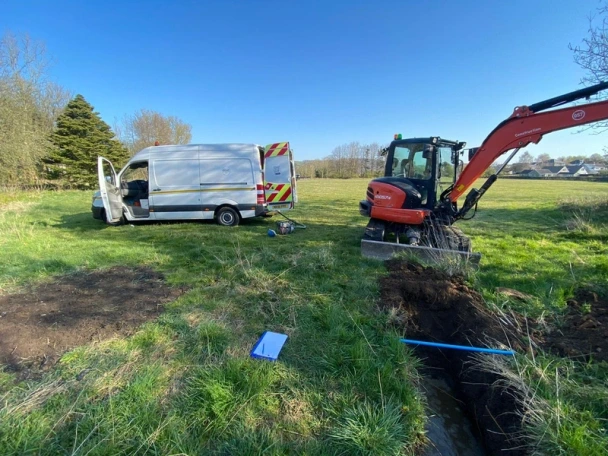
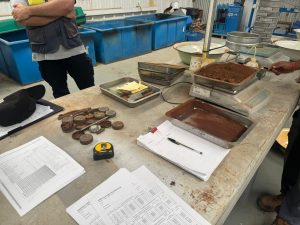
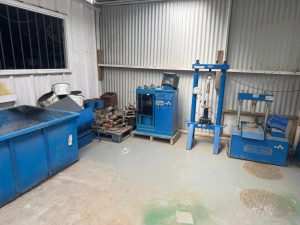
Once on the island, GES was tasked with evaluating local ground conditions, reviewing available testing equipment and developing a clear, achievable earthworks specification that would enable local teams to safely construct engineered fills using on-island materials. The project required a balance of technical precision and practical understanding of what could realistically be delivered within the island’s resource constraints.
Solution: Practical Earthworks Guidance and Ground-Investigation Strategy
GES carried out a structured programme of site review, technical assessment, and specification development, designed to equip local engineers with a comprehensive yet accessible framework for implementing good geotechnical practice.
Material and Geological Assessment
The island’s geology is predominantly volcanic, with widespread deposits of weathered basalt and residual clay. Through field observations and testing data review, GES identified that much of the excavated material could be reused as engineered fill when properly classified, compacted, and moisture-conditioned. The soils were generally described as stiff to very stiff red-brown and grey-brown silty gravelly clays, containing angular to sub-rounded mudstone gravels. These were assessed as suitable general-fill materials consistent with a Class 2C designation under the Series 600 Earthworks of the UK Specification for Highway Works (SHW).
Testing and Quality-Control Parameters
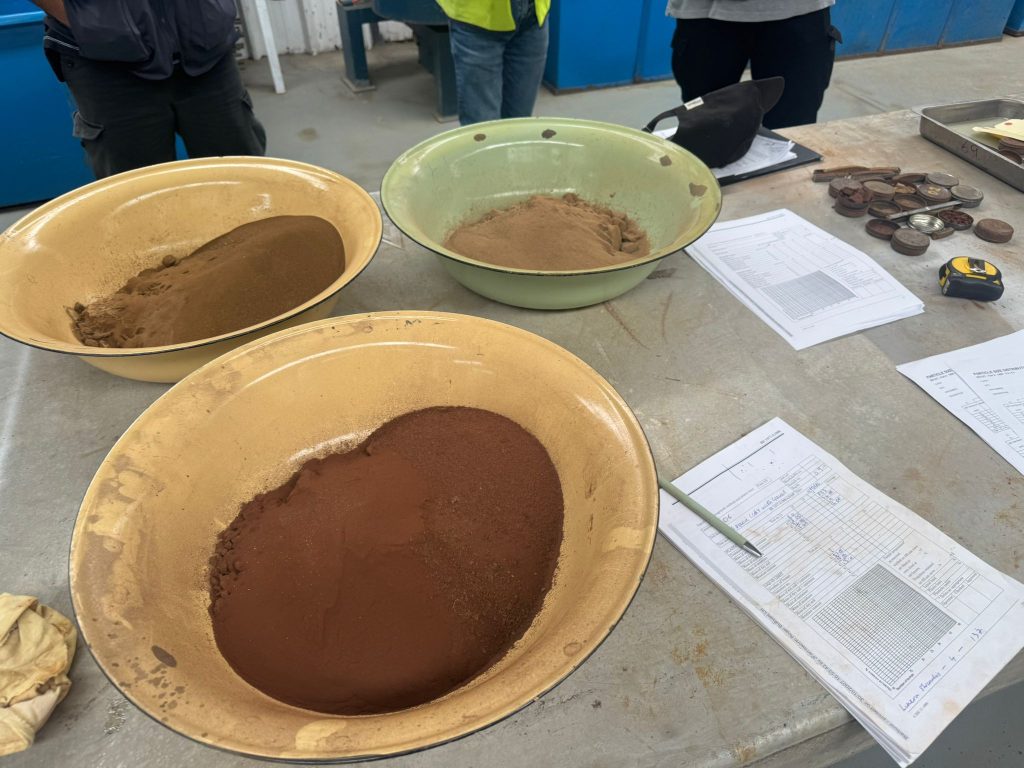
GES prepared a detailed schedule of geotechnical testing and monitoring to ensure consistent performance throughout the construction phase. Recommended field and laboratory tests included:
- Moisture-content and plasticity-index testing to track compaction suitability.
- Shear-vane or hand-penetrometer checks to monitor in-situ strength.
- Grading analyses to verify fill uniformity.
- Plate-load testing and TRL probing to confirm bearing capacity and compaction levels.
The testing frequencies were tailored to the scale of work and the island’s equipment availability, with a focus on representative sampling and practical data collection.
Earthworks Specification Development
GES’s Earthworks Specification outlined procedures for excavation, placement, and protection of fill materials. Emphasis was placed on maintaining stockpile integrity, preventing contamination, and avoiding placement during inclement weather, essential in St Helena’s variable tropical climate. Drainage, sealing of surfaces, and good housekeeping practices were incorporated to maintain long-term stability.
Equipment and Training Recommendations
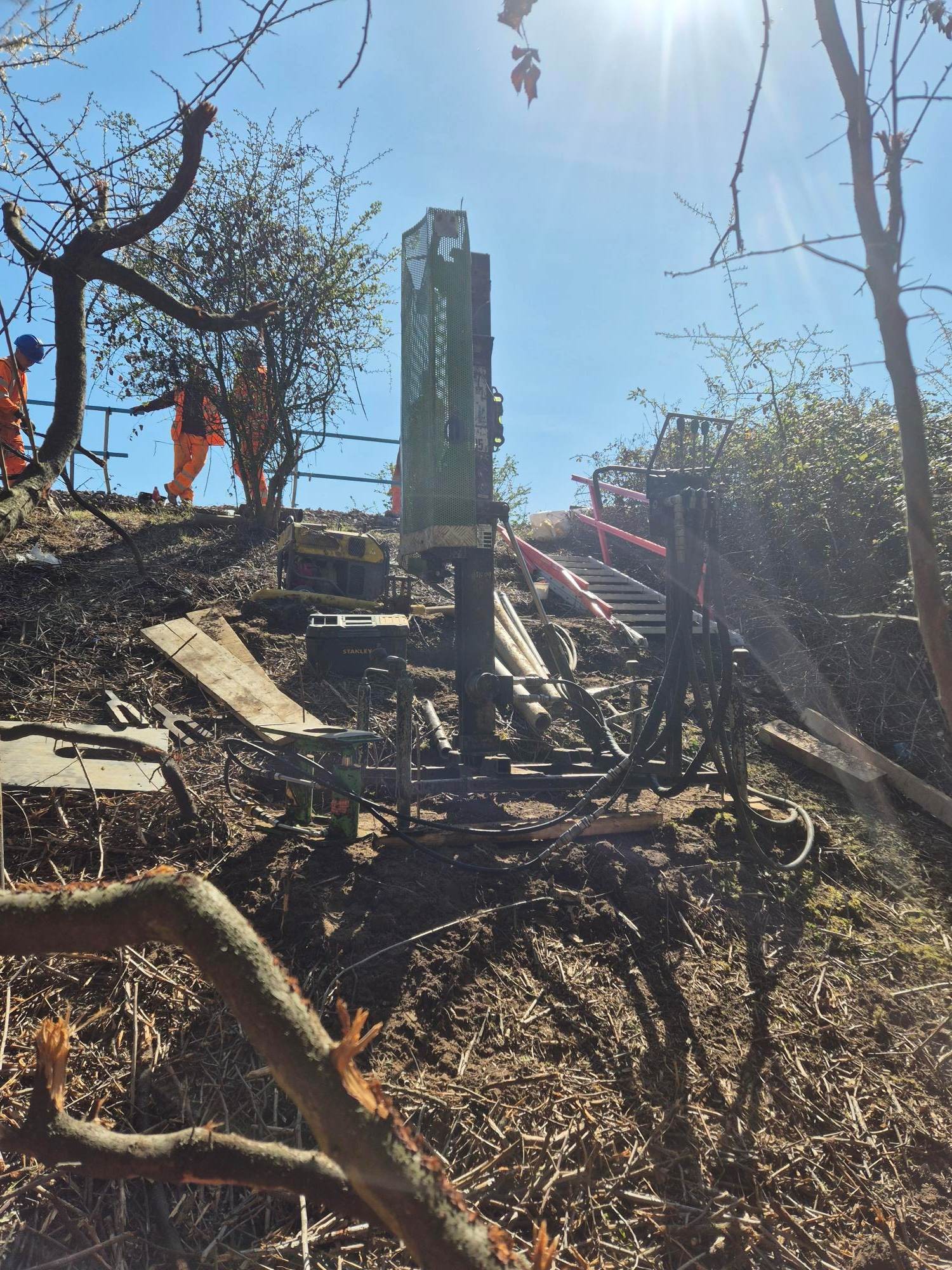
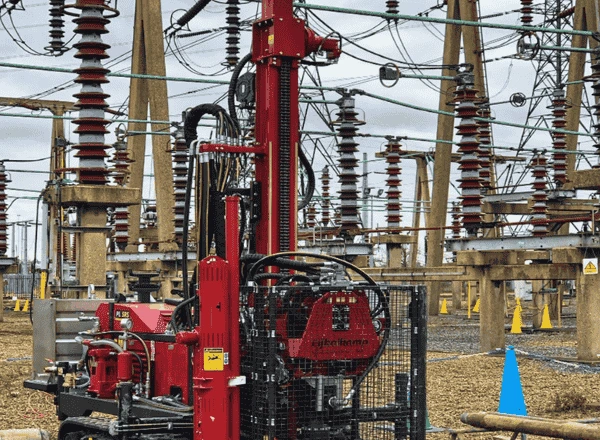
Given the limitations in drilling infrastructure, GES assessed several options and recommended the introduction of a window-sampling rig as an immediate, cost-effective solution for shallow site investigations. Lightweight, portable, and relatively easy to operate, this equipment type would allow local teams to collect undisturbed soil samples, install monitoring wells, and build on their own investigation capability with minimal outside support.
GES also provided guidance for future operator training and data-reporting standards, helping to build local knowledge and self-sufficiency in ground investigation techniques.
Result: Enabling Sustainable, Locally Managed Earthworks
The project concluded with the successful delivery of a comprehensive Geotechnical Commentary and Earthworks Specification. These documents now serve as a benchmark for future island infrastructure works.
The outcomes achieved include:
- Optimised Material Reuse: Maximising the use of local basalt and clay deposits reduced reliance on imports and transportation costs.
- Defined Testing Protocols: Laboratory and in-situ procedures ensure consistent compaction and fill quality, aligned with recognised UK standards.
- Capability Building: Practical guidance and training recommendations empower on-island engineers to undertake investigations independently.
- Sustainable Practice: Clear mitigation measures help protect works during wet seasons, maintaining both safety and environmental stewardship.
Through this assignment, GeoEnviro Solutions demonstrated how a focused, adaptable approach can overcome the challenges of distance, equipment availability, and logistics. The resulting documentation provides St Helena’s engineering teams with the tools and confidence to manage their own ground investigations, paving the way for resilient and sustainable construction.
Looking for geotechnical support in complex or remote environments?
GeoEnviro Solutions Ltd specialises in ground investigation, earthworks design and on-site training for infrastructure developments worldwide.
Contact us to discuss how we can support your next project with practical, data-driven solutions.